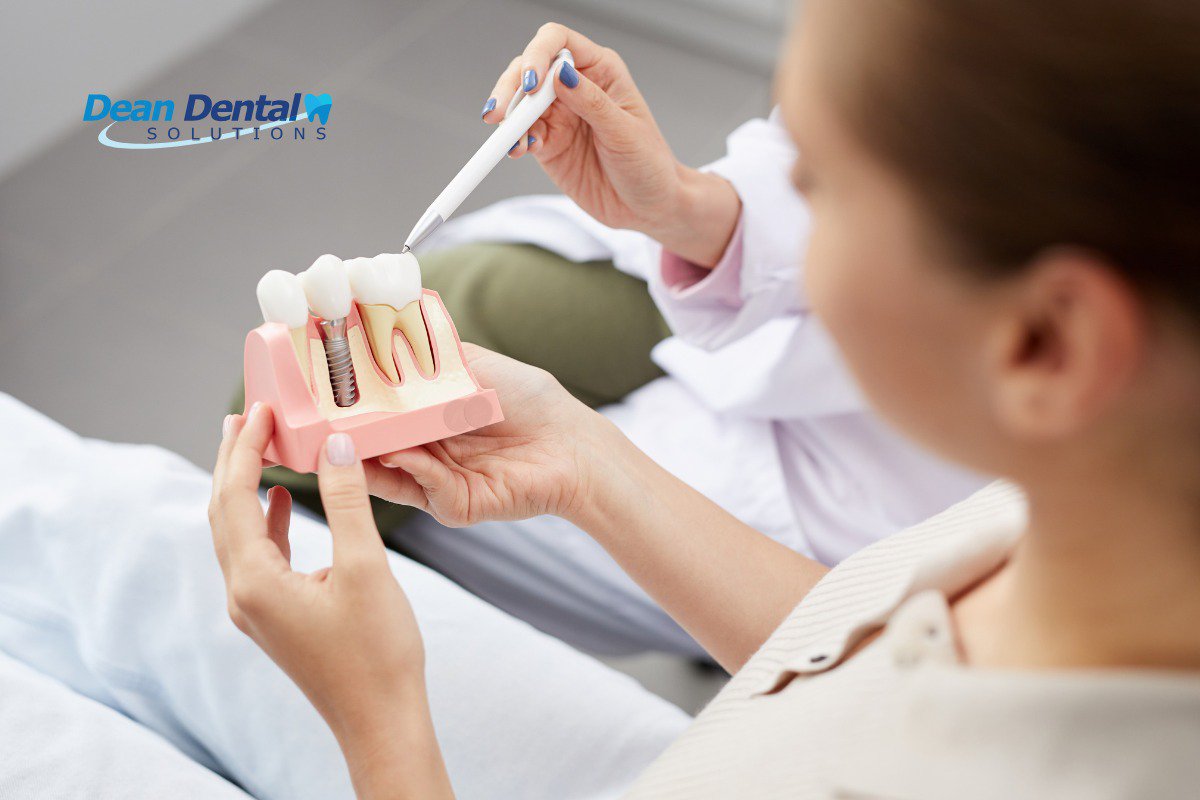
Missing a tooth can impact both your bite and your smile. If you are missing one or several, you’ve likely asked yourself, What are dental implants? Dental implants effectively address these concerns by providing a natural-looking and feeling replacement that supports your jaw. Learn what dental implants are, how they function, and who might be a suitable candidate will be covered. Together, it's possible to determine if dental implants align with your personal goals and needs.
Key Takeaways:
- Dental implants replace missing teeth using a post, abutment, and crown.
- Osseointegration helps implants stay secure as bone fuses with the post.
- Candidates need healthy gums and sufficient jawbone; smokers and people with certain conditions may not qualify.
- Implant options include endosteal, subperiosteal, mini implants, and implant-supported dentures.
- Steps: consultation → post placement → healing → crown placement.
- Recovery involves soft food, no smoking, and good hygiene; red flags include swelling, pain, or looseness.
- Compared to dentures/bridges, implants last longer and preserve jawbone.
Understanding the Basics: What Are Dental Implants
Dental implants are artificial tooth roots placed in the jaw to hold new teeth securely. When you lose one or more teeth, implants provide a permanent foundation that looks and functions like natural teeth.
A complete dental implant includes three components: the post, the abutment, and the crown.
- The Post: A small metal screw, surgically placed into your jawbone by your dentist to act as an artificial root.
- The Abutment: A connector piece, attaching the top of the post to the crown.
- The Crown: The visible portion of the implant, shaped and colored to match your surrounding teeth naturally.
Most people can’t tell the difference between an implant and a natural tooth. You can chew, speak, and smile normally. The implant feels stable and secure because it’s anchored directly in bone.
How Dental Implants Stay Secure
Implants stay firmly in place through a process called osseointegration. This occurs when your jawbone grows around and fuses with the post. Commonly, posts are made of titanium due to its special properties that encourage bone tissue to bond with it.
The length of this process can vary. It is best to consult with your dentist for the most accurate timeline. But once osseointegration is complete? The implant becomes a permanent part of your jaw structure. With proper care, it can last for decades.
Dean Dental Solutions in North Little Rock specializes in precise implant placement using advanced imaging technology. Not only will they help you answer, “What are dental implants?” but ensure optimal positioning for both function and appearance.
Comparing Dental Implant Options
| Implant Type | Placement Method | Best For |
|---|---|---|
| Endosteal Implants | Placed directly into jawbone | Most patients with adequate bone density |
| Subperiosteal Implants | Rests on jawbone under gums | Patients with insufficient bone depth who can’t have grafts |
| Mini Dental Implants | Smaller diameter posts | Narrow spaces, lower jaw, or securing dentures |
| Implant-Supported Dentures | Multiple posts anchor full or partial denture | Patients missing most or all teeth in an arch |
Different types of dental implants suit different needs. A dentist or periodontist can help you choose what's best based on bone and jaw conditions.
Dental Implant Eligibility
Good candidates for dental implants generally have healthy gums and adequate jawbone density. Your overall health plays an important role, too. Dean Dental Solutions evaluates each patient individually to determine if implants are the right choice.
Health Factors That Affect Eligibility
If your jawbone is too thin or soft, you may need a bone graft before implant placement. This procedure adds bone material to strengthen the implant site. Smokers often experience slower healing and higher failure rates, so quitting before treatment improves success.
Active gum disease must be treated before implant surgery. Chronic health conditions like uncontrolled diabetes or immune disorders may affect healing. Your dentist will review your complete medical history during the consultation.
Importance of Good Oral Hygiene
Successful implants require commitment to daily oral care. You'll need to brush twice daily and floss around the implant just like natural teeth. Regular dental visits every six months help prevent problems and extend implant life.
Patients in Little Rock who maintain excellent oral hygiene typically enjoy implant success rates above 95%. Dean Dental Solutions provides detailed care instructions to help every implant patient succeed.
The Dental Implant Process: Step-by-Step
Understanding what happens at each stage helps you prepare mentally and physically for implant treatment.
Initial Consultation and Planning
Your dentist examines your mouth using X-rays or 3D scans. These images reveal your bone structure and help plan exact implant placement. During this visit, you'll discuss your goals and receive a personalized treatment plan.
If your bone needs reinforcement, a bone graft may be scheduled first. This allows several months for the graft to integrate before implant placement.
Implant Surgery and Post-Placement
During surgery, your dentist makes a small incision in your gum to access the jawbone. A precise hole is drilled, and the titanium post is carefully positioned. The gum tissue is then stitched closed over or around the post.
Local anesthesia keeps you comfortable during the procedure. Sedation options are available for anxious patients. Dean Dental Solutions offers various cosmetic dentistry services, including implants, ensuring both functional and aesthetic excellence.
The implant site heals for three to six months while osseointegration occurs. Your bone gradually grows around the post, creating a stable foundation.
Healing Period and Crown Placement
Once healing is complete, a small procedure exposes the top of the implant post. A healing abutment shapes your gum line for about two weeks. Then the permanent abutment is attached.
Your dentist takes an impression to create a custom crown. This crown is designed to match your bite and blend seamlessly with adjacent teeth. The crown is either cemented or screwed onto the abutment, completing your restoration.
Total treatment time varies by individual case but typically spans 4 to 8 months from start to finish.

What Are Dental Implants’ Advantages & Considerations
What are dental implants' main benefits compared to other tooth replacement options? They offer several distinct advantages worth considering.
Aesthetic and Functional Benefits
Implants look completely natural and function like your original teeth. You can eat your favorite foods without worry. Unlike removable dentures, implants never slip or click when you talk.
They also prevent jawbone deterioration. When teeth are missing, bone loss occurs. Implants stimulate bone just like natural tooth roots, maintaining your facial structure and preventing the sunken appearance that often accompanies tooth loss.
What are Dental Implants’ Potential Risks and Complications
Most implant procedures succeed without problems. However, complications can occasionally occur. Infection around the implant site is possible; however, proper oral hygiene significantly reduces this risk.
Rarely, implants fail to integrate with bone. This is more common in smokers or patients with certain health conditions. Nerve damage can cause numbness or tingling, though this is uncommon with experienced practitioners. Sinus problems may develop with upper jaw implants if the implant penetrates the sinus cavity.
Warning signs of problems include increasing pain after the first few days, persistent swelling, bad taste or odor, or implant movement. Contact Dean Dental Solutions immediately if you experience any concerning symptoms.
Maximizing Implant Longevity
Proper care extends implant life dramatically. Brush twice daily using a soft-bristle toothbrush. Floss carefully around the implant crown. Avoid chewing ice or using your teeth as tools.
Smoking significantly increases failure risk. Quitting before treatment improves your chances of success. Regular dental checkups every six months allow early detection of any issues.
Many implants last 20 years or longer. Some patients enjoy their implants for life. Your commitment to oral hygiene makes the biggest difference in long-term success.
How Implants Compare to Other Tooth Replacement Options
Understanding your alternatives helps you make an informed decision.
Implants Versus Dentures and Bridges
Dental implants last longer than traditional dentures or bridges. Dentures rest on your gums and may slip or cause sore spots. They require daily removal for cleaning. Bridges attach to adjacent teeth, which must be filed down. This can weaken otherwise healthy teeth.
Implants are placed directly in bone without affecting neighboring teeth. They prevent bone loss that occurs with other options. Most patients find implants more comfortable and natural-feeling than removable alternatives.
Dentures and bridges cost less initially but may need replacement or repair over time. Implants have higher upfront costs but lower long-term maintenance expenses.
What are Dental Implants: Understanding the Investment
Cost is an important consideration when exploring tooth replacement options. Your investment depends on several factors unique to your situation.
Factors That Influence Your Investment
Several elements affect the overall investment in dental implants. The number of implants and teeth being replaced matters significantly. Your bone quality and whether grafting is needed influence the treatment plan. The type of implant and crown materials you choose makes a difference.
Every patient's needs are different, which is why Dean Dental Solutions provides personalized consultations to discuss your specific situation. We understand that dental implants represent a significant investment in your health and confidence. Our team takes time to explain your options and help you make informed decisions.
Choosing Dental Implants at Dean Dental Solutions
Dental implants offer long-term benefits, like stability, natural appearance, and preservation of jawbone structure. From understanding the three-part implant system to navigating the multi-month process, our experienced team guides you through every step.
At Dean Dental Solutions, we combine advanced technology with personalized care to deliver exceptional implant results. Our team serves patients throughout North Little Rock and Little Rock with comprehensive cosmetic dentistry services, including dental implants, smile makeovers, and restorative treatments. We utilize precise 3D imaging to plan every implant placement, ensuring optimal outcomes.
Ready to restore your smile with dental implants? Whether you’re missing one tooth or need a full-arch restoration, we’ll create a treatment plan tailored to your needs and goals. Contact Dean Dental Solutions today to schedule your consultation. Let's determine if dental implants are the right solution for your tooth replacement needs. Your confident, complete smile is closer than you think.


Leave a Reply