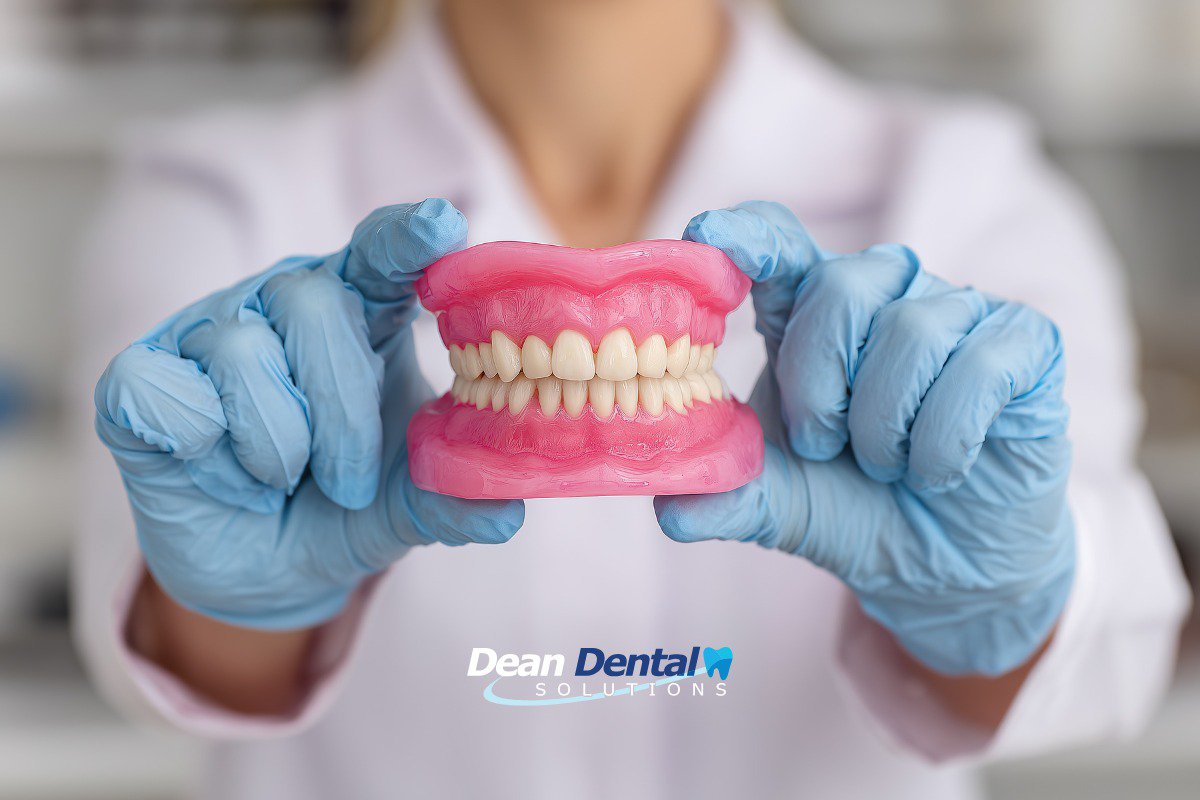
Looking for permanent dentures near you and not sure where to start? If missing teeth affect how you eat, speak, or smile, it may be time to explore your tooth replacement options in a calm, step-by-step way. At Dean Dental Solutions in North Little Rock, we help patients choose strong, natural-looking dentures that fit their goals, comfort level, and budget, without pressure. Below, we’ll walk through what “permanent dentures” means, what options you may have, and what to expect from the process.
Key Takeaways:
- Permanent dentures are non-removable and supported by implants; they can look, feel, and function like natural teeth.
- Implant-supported dentures typically cost $3,500–$6,000 per arch; full sets range from $7,000–$15,000, and can reach $20,000 with premium materials.
- Permanent vs. removable: Permanent dentures attach to implants; removable dentures rest on the gums and may shift.
- Types include: implant bridges (fully fixed), hybrid dentures (removable by the dentist), and full-arch fixed dentures.
- Lifespan: Permanent dentures often last 10–15 years; implants may last a lifetime with good care.
- Insurance: PPO and senior-focused plans may cover 40–60%; confirm whether it’s classified as “major care.”
- Financing: Many clinics also offer monthly payment plans; CareCredit and some Medicaid plans may help.
- Same-day dentures: Available at Dean Dental Solutions in North Little Rock
Understanding the Basics: What are Permanent Dentures?
Generally, “permanent dentures” refers to a full-arch denture secured to dental implants. Unlike traditional dentures that rest on the gums, implant-supported options are anchored to your jawbone, helping the denture feel more stable for everyday life.
If you want teeth that look natural and feel secure, implant-supported dentures may be a great option to discuss during a consultation.
How Do Permanent Dentures Differ from Removable Dentures?
Removable dentures can shift or irritate the gums over time, while permanent dentures are secured to dental implants for a more stable, comfortable fit.
Permanent dentures, also called fixed implant dentures, are anchored directly to dental implants, which means they don’t come out at home. Because of that, they are typically more stable and comfortable for chewing and speaking.
Removable dentures, often referred to as traditional dentures, rest directly on the gums and need to be taken out every day for cleaning. However, over time, they may also shift, rub, or create sore spots.
Are Implant Dentures the Same as Permanent Dentures?
Not always: some implant dentures are fixed, while others are removable snap-in dentures. These still use implants, but you also take them out at home.
A simple rule of thumb: every permanent denture is implant-supported, but not every implant-supported denture is permanent.
What Permanent Tooth Replacement Options are Available?
When patients search “permanent dentures near me,” they’re often describing one of these implant-based options:
| Implant Option | What Is It? | Is It Removable? |
|---|---|---|
| Full-arch fixed dentures (fixed implant restoration) | The “doesn’t come out” option many people mean when they say “permanent dentures.” Designed to be secure and stable. | Typically only removed by a dentist when needed for maintenance. |
| Hybrid dentures / implant bridges | Secured to implants and feel very stable. Design can vary, but they’re built for strong support and long-term function. | Depending on the design, they may be removable only by the dentist for professional cleaning and long-term maintenance. |
| Implant-supported removable (snap-in) dentures | A middle-ground option: more secure than traditional dentures while still practical for daily hygiene. | Removable at home for cleaning. |
If you’re deciding between implants and traditional dentures, the team at Dean Dental Solution can help you find the best option for you.
What is the Process of Getting Permanent Dentures?
Every smile is different, but the general steps often look like this:
- Consultation and imaging (exam + X-rays/3D scan)
- Planning (we map implant placement for comfort, bite, and aesthetics)
- Extractions or preparatory care (if needed)
- Implant placement
- Healing/osseointegration (the bone fuses to the implant over time)
- Final denture attachment (fixed or snap-in, depending on your plan)
If you want a deeper look at healing and timelines, this resource helps with understanding dental implant healing stages.
How Much Do Permanent Dentures Cost, and What Affects Pricing?
Costs can vary significantly, so it’s best to treat online numbers as starting points, not a guaranteed quote.
What Affects Total Cost?
- Number of implants needed (often 4–6 per arch, sometimes more)
- Materials (acrylic vs. zirconia, for example)
- Extractions, bone grafting, or treatment for gum disease
- Type of restoration (snap-in vs fixed)
- Complexity of your bite and jaw structure
Typical Cost Ranges (General Guidance)
Many implant-supported denture cases fall somewhere in the mid-to-high thousands per arch, and full-mouth treatment can also be higher depending on materials and additional procedures.
At Dean Dental Solutions, we’ll walk you through your plan clearly so you understand what’s included, what’s optional, and what helps you get the best long-term value.
Do Dental Insurance Plans Cover Permanent Dentures?
Sometimes, especially if the treatment is considered medically necessary and coded under major services. However, plans vary a lot.
A few important things to know:
- Many plans have annual maximums that limit how much they pay in a year.
- Some plans cover the denture portion but not implants (or cover implants at a different percentage).
- A pre-treatment estimate can help prevent surprise bills.
Our team can help you understand your benefits and what your plan may contribute.
Are Payment Plans Available for Permanent Dentures?
Yes, many patients choose to spread treatment costs over time. If monthly payments make care more manageable, ask our team about financing options during your visit. We’ll help you understand what’s available and also what fits your budget.
How Long Do Permanent Dentures Last, and How Do You Care for Them?
While they’re called “permanent,” they can still wear out over time. Many fixed dentures last 10–15 years before needing repairs or replacement (sometimes longer), depending on:
- Materials used
- Bite forces (grinding/clenching)
- Daily hygiene
- Regular professional maintenance
Implants themselves can last for decades with excellent care.
How to Clean and Maintain Fixed Dentures
For most implant-supported dentures, daily care generally includes:
- Brushing with a soft toothbrush and additionally, non-abrasive toothpaste
- Cleaning under the denture with floss threaders, implant-safe floss, or a water flosser
- Keeping gums and tongue clean, too
- Staying consistent with professional cleanings and exams
If anything feels loose, irritated, or painful, don’t “wait it out.” Early adjustments can prevent bigger problems.
When Should You Consider Permanent Dentures?
Permanent dentures may be worth exploring if you:
- Want a more secure fit than traditional dentures
- Struggle with denture movement, sore spots, or adhesives
- Want improved chewing confidence
- Want a long-term solution that also supports jaw function

Are Permanent Dentures Worth the Investment?
For many people, yes. Permanent (implant-supported) dentures can restore comfort, stability, and confidence, often reducing the need for adhesives and easing the worry of dentures shifting while you eat or speak.
That said, “worth it” also depends on your goals, your oral health, and your budget. The best way to know is to get a personalized evaluation and a clear treatment plan.
What are the Advantages and Disadvantages of Permanent Dentures?
Potential benefits
- Improved stability: Less movement than traditional removable dentures.
- Better comfort for many patients: Reduced rubbing and pressure on the gums.
- More confident chewing and speaking: Many people feel more secure socially and at meals.
- Natural-looking results: Designed to complement your facial structure and smile.
Potential drawbacks
- Higher upfront cost than removable dentures.
- Surgery is required for dental implants.
- Healing time is part of the process, and some temporary soreness or swelling is normal.
- Maintenance still matters: “Permanent” means not removed at home, but you’ll still need daily cleaning and regular professional care.
How Does the Cost Compare Between Fixed and Snap-in Options?
In many cases:
- Snap-in dentures (implant-supported but removable) may have a lower starting cost and can be easier to clean at home.
- Fixed dentures may cost more upfront, but can offer maximum stability and fewer day-to-day issues with movement.
Your final cost depends on the number of implants needed, materials, bite alignment, and whether you need extractions or other preparatory care. A consultation and imaging are the fastest ways to get accurate numbers for your situation.
Are Permanent Dentures a Good Investment for Long-term Oral Health?
They can be, especially when implants are used. Dental implants can also help support jawbone health and facial structure, which may improve long-term comfort and function. With consistent home care and regular dental visits, many implant-supported systems last 10+ years, and implants themselves often last much longer.
At Dean Dental Solutions, our team can walk you through options and help you understand what fits your budget, clearly and without pressure.
Schedule a Permanent Denture Consultation in North Little Rock
Permanent dentures can be stable, natural-feeling, and truly life-changing for eating, speaking, and confidence. With the right support and a clear plan, you can move forward with a solution that fits your health, comfort, and budget.
If you’re searching for “permanent dentures near me” and you’re in or near North Little Rock, the next step is a personalized consultation. We’ll evaluate your smile, explain your options in plain language, and help you choose a plan you can feel confident about. Ready to find your best smile? Contact us today.


Leave a Reply