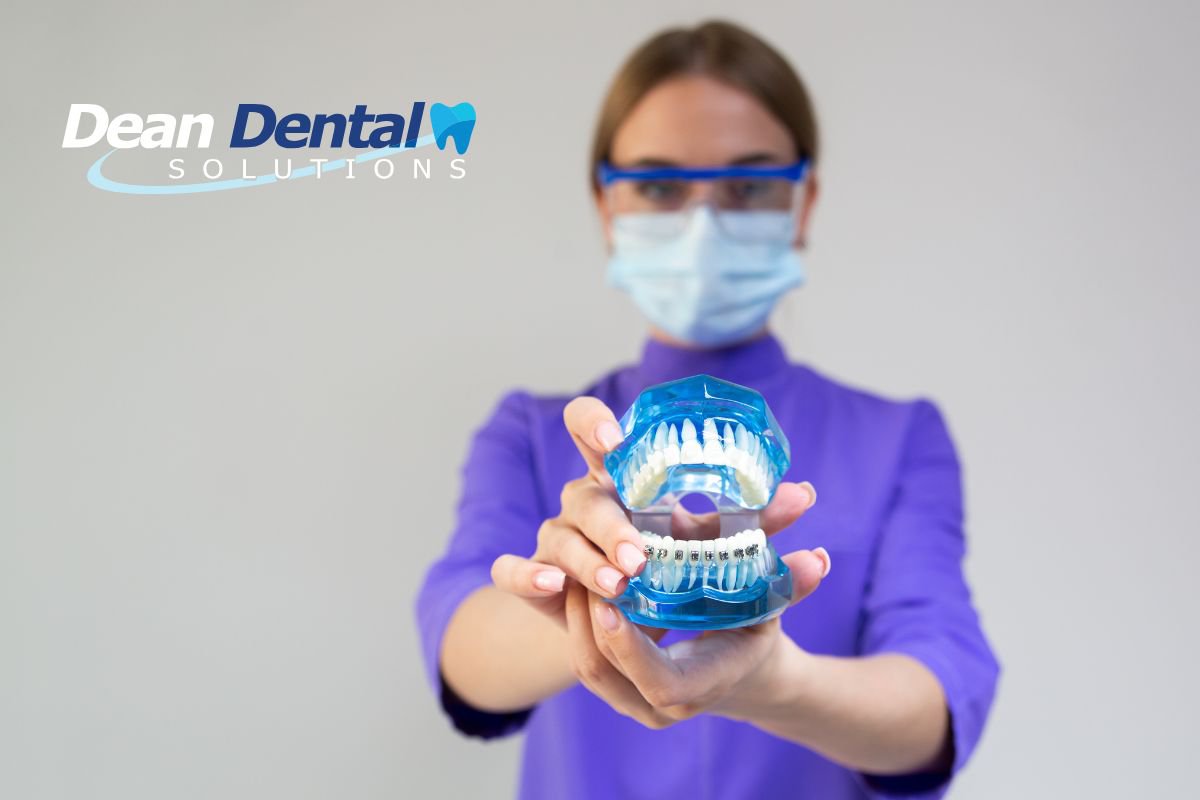
When considering All-on-4 vs overdentures, it isn’t easy, but it matters. Both can replace your full set of teeth, but they work very differently. Dean Dental Solutions has helped many people in North Little Rock decide which one fits their life, budget, and smile goals. If you want strong teeth, a natural look, and long-term comfort, let’s figure out what’s right for you.
Key Takeaways:
- All-on-4 is a fixed full-arch implant system using four angled implants; overdentures are removable and snap onto 2–4 implants.
- All-on-4 can be placed immediately (“teeth in a day”) and allows better taste, speech, and stronger bite.
- Overdentures cost less upfront ($12k–$20k/arch vs. $25k–$35k/arch for All-on-4), but parts wear out sooner.
- All-on-4 usually lasts 15–20+ years; overdentures last 5–10 years.
- All-on-4 uses titanium and zirconia; overdentures often use acrylic and clips that wear down.
- All-on-4 is brushed and flossed like natural teeth; overdentures must be removed and cleaned daily.
- All-on-4 looks better, feels more natural, and impacts taste and speech less.
- Dentists check bone, health, and lifestyle to help with the best choice.

All-on-4 vs Overdentures: Key Differences
The biggest difference is how they fit. All-on-4 uses four implants to hold a full row of teeth, and they're fixed in place. Overdentures also use implants, but you take them out for cleaning.
All-on-4 doesn’t come out. They stay in your mouth like natural teeth. They don’t cover the roof of your mouth, so food tastes better and speech feels normal. That matters to many patients who care about clear speech and enjoying meals.
In contrast, overdentures snap on and off. They are removed at night and for cleaning. They may cover more of your mouth, making your taste dull and your speech harder.
All-on-4 vs Overdentures: Structure and Retention Differences
All-on-4 uses four fixed implants per arch; overdentures snap onto 2–4 implants.
All-on-4 implants go in at angles to provide support even if your bone is weak. They hold a full set of teeth that you don’t take out. This puts less stress on your gums and allows stronger chewing.
Overdentures use clips or bars. Some patients call them “snap-ons.” They grip better than old dentures, though they may shift with tough foods.
What Distinguishes Fixed vs. Removable Dental Prostheses?
Fixed options stay in place like natural teeth and require regular brushing and flossing. Removable ones, like overdentures, can be taken out for cleaning and need to be placed back afterward. Fixed prostheses feel more natural, while removable ones may feel bulky initially.
Fixed options stay put. Removable ones come out.
You brush All-on-4 like your own teeth. Flossing needs extra attention or tools like a water flosser. With overdentures, you take them out, clean them, and place them back. Fixed teeth feel more natural. Removable ones may feel bulky at first.
All-on-4 vs Overdentures: Function and Appearance Differences
All-on-4 offers a more natural feel and look. It allows you to chew more foods, speak more clearly, and enjoy a tailored fit. Overdentures, on the other hand, provide a better grip than regular dentures but can shift or cause gum soreness over time.
Your decision depends on how you want to live. If you’re looking for a long-term solution that stays in place, All-on-4 could be ideal. If cost or flexibility is a concern, overdentures might be a better fit.
For more details, check out this guide on dental implants.
How Does the All-on-4 Procedure Work?
When approaching the decision of all-on-4 vs overdentures, it’s important to also understand how each procedure works. The All-on-4 approach uses four implants to support a full arch of teeth. These teeth stay in place, allowing most patients to leave with new teeth on the same day.
What Are the Steps in the All-on-4 Surgical Process?
- Examination: The process begins with an examination to check gums, bone, and overall health. 3D scans are used to plan the placement of each implant carefully, avoiding nerves or sinuses, and shaping teeth that complement the face.
- Surgery: During surgery, two implants are placed vertically at the front, and two at the back at an angle. This often eliminates the need for bone grafts, even in cases of thin bone.
- Temporary Teeth: After the implants are placed, a set of temporary teeth is provided on the same day. Once the implants heal, a final set of teeth is crafted and fitted.
What Does “Teeth in a Day” Mean for All-on-4 Patients?
"Teeth in a Day" refers to receiving a full set of temporary teeth immediately after surgery. This temporary set is stable enough to use for soft foods and speaking. A few months later, the final permanent bridge is fitted, providing a natural feel akin to real teeth.
How Is Technology Used in Treatment Planning and Placement?
Advanced scanning tools and digital models are employed to determine optimal implant placement and design new teeth ahead of surgery. This meticulous planning leads to a quick procedure with reduced stress on the jaw, ensuring smoother healing and accurate results.
For more information, explore whether this approach suits you: All-on-4 dental implants or read this external guide to All-on-4.
This method provides fast and reliable results.
What Is the Process for Getting Overdentures?
First, talk with your dentist. They'll check your mouth, bone, and health. X-rays or a CT scan may be used to find the best places for implants.
Then in surgery, 2–4 implants are placed in the jaw. These small posts need a few months to bond with the bone.
While healing, a soft denture might be worn. Once the bone heals, the dentist places abutments. These connect the implants to the denture.
Impressions of the mouth help make the actual denture. In bar-supported overdentures, a bar links the implants and provides stronger support.
Once ready, the dentist teaches how to snap the denture on and off and how to clean it.
Usual Healing and Adjustment Time
The healing process can take two to six months, depending on your bone health. Typically, a full denture might be ready in three months, but it varies for each patient.
Adjustment is also essential. Getting used to talking and eating with new dentures requires practice, although most individuals adapt swiftly.
Regular dental check-ups are crucial. Your dentist will assess the fit after a couple of weeks and periodically over the following months.
If you're considering All-on-4 versus overdentures, Dean Dental Solutions can help you choose the best fit. Overdentures offer a cost-effective solution, providing better stability than traditional dentures and enhancing both eating and speaking experiences.
All-on-4 vs Overdentures: Pros and Cons
Selecting between All-on-4 and overdentures involves weighing your personal needs, health, and budget. Here's a refined breakdown of each option's benefits and drawbacks:
- All-on-4 provides a stable, natural feel with enduring results, though it does have a higher initial cost.
- Overdentures offer a more affordable upfront cost and suit those with weaker jawbones, but they need to be removed and cleaned daily.
Both options enhance oral function. Evaluate what best fits your lifestyle and consult with knowledgeable dental professionals for a well-informed decision.
What Advantages Does All-On-4 Offer?
All-on-4 feels more natural, boasts a stronger bite, and provides continuous comfort.
These teeth remain fixed, allowing you to eat a wide variety of foods without covering the roof of your mouth, maintaining normal taste and speech. Additionally, All-on-4 helps preserve bone strength and facial fullness.
Pros and Cons of All-on-4
Pros:
- Permanently fixed
- Strong bite force
- Natural appearance and comfort
- No adhesives needed
- Prevents bone loss
- Long-lasting solution
Cons:
- Higher initial expense
- Requires surgical procedure
- Needs sufficient jawbone
- May not be suitable for certain health conditions
With All-on-4, you can achieve a complete transformation in just one day. Discover more about the benefits: How dental implants can help.
Pros and Cons of Overdentures
Pros:
- Lower initial cost
- Easy maintenance
- Suitable for weaker jawbones
- Less complex surgery
- Potential reuse of existing denture base
Cons:
- Requires nightly removal for cleaning
- May shift during eating or speaking
- Parts may need replacement
- Could impact taste due to mouth coverage
Overdentures are often ideal for those with thin gums or for those seeking a flexible initial solution.
Which Option Offers More Lasting Results?
Answer: All-on-4 excels in long-term feel and function.
Patients often report forgetting they even have implants, enabling them to enjoy food and speak freely without worry.
While overdentures provide benefits, their parts may wear out over time, leading to frustrations with frequent removal.
Both solutions surpass traditional dentures, and the best choice depends on your unique needs and financial considerations.
Explore more on the benefits of implants at Medical News Today.
All-on-4 vs Overdentures: Who Is the Best Candidate?
Ideal Candidates for All-on-4 Implants
If you're in good health and have sufficient bone in the front jaw, All-on-4 implants might be a perfect fit. This is a great option for individuals who have lost all their teeth or need them removed. It’s important to be in reasonable health without conditions that significantly hinder healing.
Even if you've experienced some bone loss, you might still qualify through grafts or specialized implants.
How to Assess Bone Strength
A professional dental examination, including scans and X-rays, will be conducted by your dentist to determine bone strength.
When Overdentures May Be a Better Fit
Overdentures are suited for those with thinner bone or less optimal health. They require only two to four implants and involve a simpler surgical procedure. This option is often preferred by older patients.
For smokers, the healing process can be more challenging. While many smokers can still receive overdentures, All-on-4 might not be suitable for everyone in this group.
Age Considerations
Age is not a limiting factor; overall health and bone condition are more critical. Individuals over 65 can successfully undergo either procedure, but personal medical history and medication use should be evaluated.
Diabetes and Dental Implants
For those with diabetes: If the condition is well-managed, it's often possible to proceed with implants. Learn more about diabetes and dental implants.
The Importance of a Consultation
A consultation is vital as it allows us to understand your specific needs and conditions. We'll assess your oral health, bone structure, and personal goals. Using scans, we can precisely plan implant placement and discuss maintenance and cost considerations.
Seeking professional advice ensures an informed decision tailored to your unique situation.
Cost Comparison: All-on-4 vs. Overdentures
Usual Costs
- All-on-4: $25,000 to $35,000 per arch
- Overdentures: $12,000 to $20,000 per arch
All-on-4 generally involves higher costs due to more complex surgery, premium materials, and lasting results. Overdentures offer a more budget-friendly upfront cost with fewer implants.
Factors Influencing Price
- Bone health and grafting needs
- Material choices (e.g., zirconia for added durability)
- Number of implants required
- Location (costs may vary by region)
- Dentist's expertise and experience
Insurance and Payment Options
Insurance can often help mitigate costs, especially for overdentures. Many clinics offer flexible payment plans to ease financial strain, making options accessible within your budget.
All-on-4 may offer better long-term value, enhancing comfort and aesthetics over time.
All-on-4 vs Overdentures: Durability Over Time
Longevity
- All-on-4: 20+ years with proper care
- Overdentures: 5–10 years
All-on-4 implants use titanium posts designed for lifelong stability, whereas overdentures may need more frequent replacements due to wear.
Material Longevity
- Titanium and zirconia are robust and long-lasting.
- Acrylic for overdentures is less durable, leading to quicker wear and repairs.
Daily Care’s Role
Proper hygiene is key:
- All-on-4: Brush and floss like natural teeth.
- Overdentures: Remove for thorough cleaning.
Both need regular dental check-ups to maintain their effectiveness and avoid complications.
All-on-4 vs Overdentures: Cleaning and Maintenance
All-on-4 Care
- Fixed in place: Clean like natural teeth.
- Tools: Soft brushes and water flossers.
- Dental Visits: Semi-annual cleanings.
Overdenture Care
- Removable: Requires nightly removal and soaking.
- Routine: Brush and clear gum areas.
- Dental Visits: Check for wear and adjustment needs.
The care processes help maintain functionality and hygiene for both solutions.
All-on-4 vs Overdentures: Aesthetic and Functional Outcomes
Natural Feel and Function
- All-on-4: Offers a stronger bite force and natural feel.
- Overdentures: Improve function but may cause more gum soreness over time.
Appearance
All-on-4 implants create a lifelike, tailored appearance, enhancing confidence with a natural smile.
Taste and Speech
All-on-4 avoids covering the palate, improving taste and speech clarity compared to the more intrusive feel of overdentures.
How Dean Dental Solutions Can Help You Decide
Your dental health, lifestyle, and personal needs inform the best choice. Dean Dental Solutions is here to guide you in making an informed decision that aligns with your comfort and financial situation.
Whether you're interested in the durable, natural feel of All-on-4 or the flexibility of overdentures, our caring team at Dean Dental Solutions welcomes your inquiries. Let us help you achieve the smile you deserve. Contact Us Today!


Leave a Reply